



Best Tools for Benchmarking Email Deliverability
Want your emails to actually land in inboxes? Benchmarking tools are the secret weapon for improving email deliverability. Whether you're aiming to bypass spam filters, hit the Primary inbox, or boost open rates, the right tool can make all the difference. Here's what you need to know:
- Key Metrics: Track inbox placement, spam scores, and domain reputation to ensure your emails are seen - not ignored.
- The Problem: Nearly 40% of emails fail to reach inboxes. That’s lost revenue, wasted effort, and missed opportunities.
- Top Tools:
- Icemail.ai: Streamlines setup with auto-authentication and costs just $2.5 per mailbox - perfect for scaling campaigns.
- ZeroBounce: Focused on email validation, starting at $49/month.
- GlockApps: Offers spam filter testing but requires manual setup, starting at $59/month.
- Folderly: Automates mailbox warming with a $96/month price tag.
- Validity Everest: Provides enterprise analytics but is costly and complex, starting at $20/month.
Quick Comparison:
| Tool | Setup Time | Starting Price | Inbox Placement Testing | Spam Checking | Authentication Setup | User Rating |
|---|---|---|---|---|---|---|
| Icemail.ai | 10 minutes | $2.5/mailbox | Real-time | AI-driven | Auto-authentication | Premium |
| ZeroBounce | Complex | $49/month | Limited | Yes | DMARC monitoring | 4.6/5 |
| GlockApps | Manual/technical | $59/month | 70+ ISPs | Yes | Manual guidance | 4.2/5 |
| Folderly | Easy | $96/month | Major ISPs only | Yes | Automated checks | 4.5/5 |
| Validity Everest | 30–60 minutes | $20/month | 140+ ISPs | Yes | Monitoring only | High cost |
Why It Matters: If your emails aren’t landing in inboxes, they’re not driving results. Tools like Icemail.ai simplify deliverability management, saving time and boosting ROI for marketers, agencies, and SDRs alike.
Mastering Email Deliverability in 2026 The Top Tools You Need
Icemail.ai: Premium Email Deliverability Benchmarking
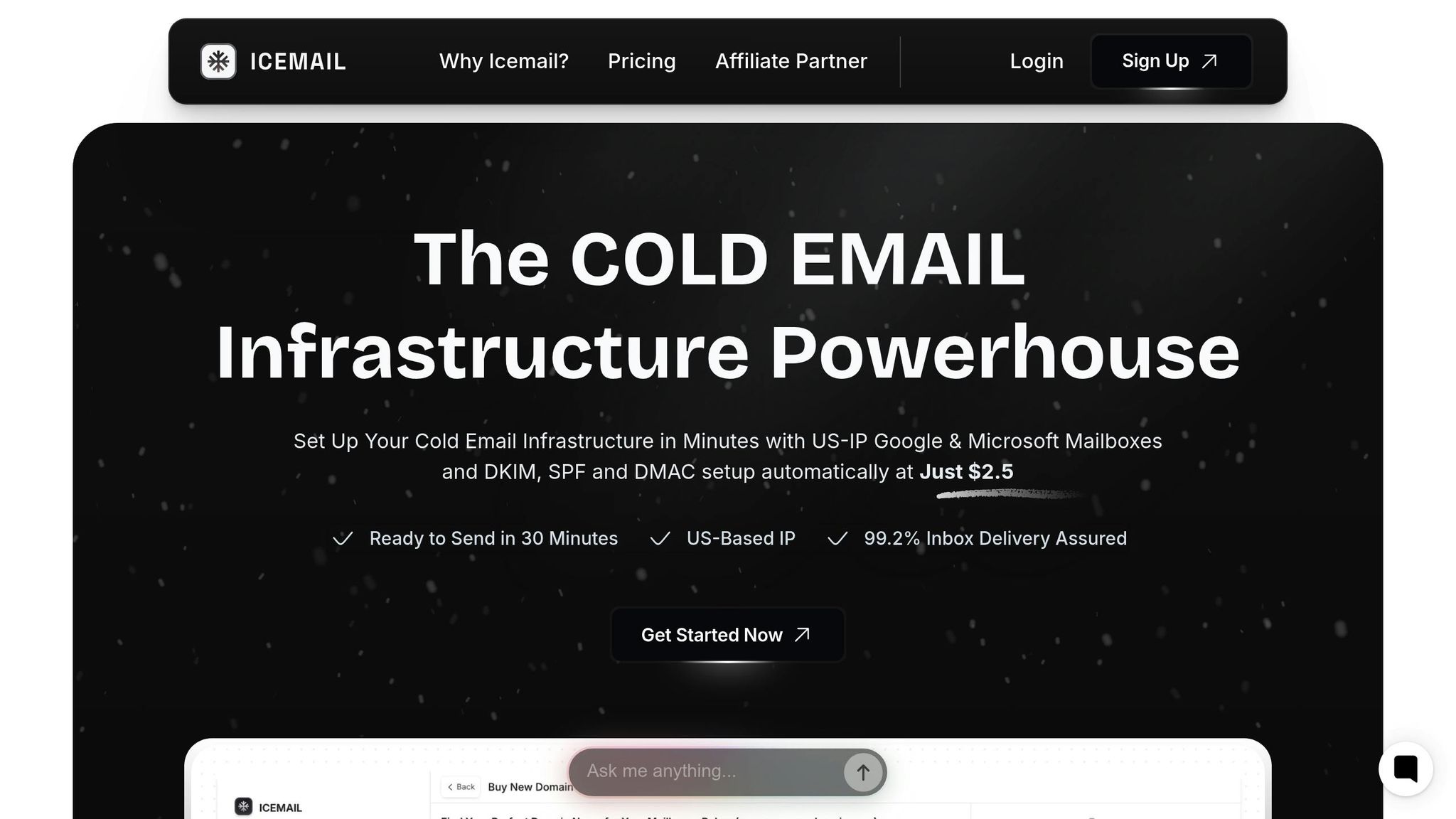
Icemail.ai is making waves as the go-to solution for agencies and SDRs who need fast, reliable, and authenticated email infrastructure. Unlike most deliverability tools that focus only on testing, Icemail.ai tackles the root problem: getting mailboxes properly authenticated from the start.
With a 10-minute onboarding process, Icemail.ai eliminates the frustrating setup delays that plague competitors like ZeroBounce and Validity Everest. Both platforms are often criticized for their complicated setup processes and steep learning curves. Icemail.ai's automated setup ensures mailboxes are authenticated correctly, preventing the configuration errors that can derail campaigns. Since proper authentication is a must-have for accurate deliverability testing, this automation ensures you're set up for success from day one. Essentially, Icemail.ai bridges the gap between technical setup and measurable deliverability improvements.
Key Features of Icemail.ai
Icemail.ai offers bulk mailbox purchases for Google Workspace and Microsoft at just $2.5 per mailbox/month - a fraction of the price competitors charge. For instance, Folderly costs $96 per mailbox per month, making Icemail.ai nearly 48 times more affordable for scaling outreach efforts. This pricing becomes a game-changer for high-volume campaigns spread across multiple domains.
The platform also includes an AI-powered domain finder and 1-click mailbox export, making it easy to scale your infrastructure without adding extra management headaches. With automatic domain setup and DNS record management, technical teams can skip time-consuming manual tasks. For agencies juggling numerous client campaigns, this means you can deploy infrastructure in minutes instead of days. These features make Icemail.ai stand out when compared to other tools in the market.
Why Icemail.ai Outperforms Competitors
Success in email deliverability starts with the right infrastructure. Icemail.ai excels by offering speed and affordability. While other platforms charge more for limited testing capabilities, Icemail.ai delivers the actual infrastructure needed to achieve high deliverability rates - not just tools to diagnose issues. This approach helps users build a foundation to meet or exceed the industry average deliverability rate of 88.9%.
Designed specifically for SDRs and agencies focused on cold email campaigns, Icemail.ai avoids the pitfalls of developer-oriented tools like Mailgun Optimize and Mailtrap, which require API knowledge and complex technical setups. When maintaining a spam complaint rate below 0.1% is crucial for protecting your sender reputation, having properly configured mailboxes from the start isn’t just helpful - it’s essential. With Icemail.ai, you’re not just avoiding pitfalls; you’re setting yourself up to reach prospects effectively without risking your domains.
Other Email Deliverability Benchmarking Tools
While Icemail.ai focuses on setting up the infrastructure for cold email outreach, there are other tools designed to test and monitor your email deliverability once your mailboxes are configured. These tools vary in their approach, offering unique features to enhance deliverability testing. Here's a closer look at some popular options.
ZeroBounce
ZeroBounce blends email validation with deliverability diagnostics, keeping an eye on over 200 blacklists to safeguard your sender reputation. It boasts an impressive 99.6% accuracy rate for email validation.
The ZeroBounce ONE™ subscription costs $99/month (or $79/month when billed annually) and includes 25,000 validation credits, 100 inbox placement tests, and 10 blacklist monitors. There’s also a pay-as-you-go option at $0.002 per email.
However, it’s not without its drawbacks. Processing large email lists can take hours, potentially delaying your campaigns. The platform also logs users out after brief inactivity, which can disrupt workflows. While it holds a solid 4.6/5 rating on G2, its inbox placement tests are limited to just 20+ providers. For those seeking broader capabilities, GlockApps may be a better fit.
GlockApps
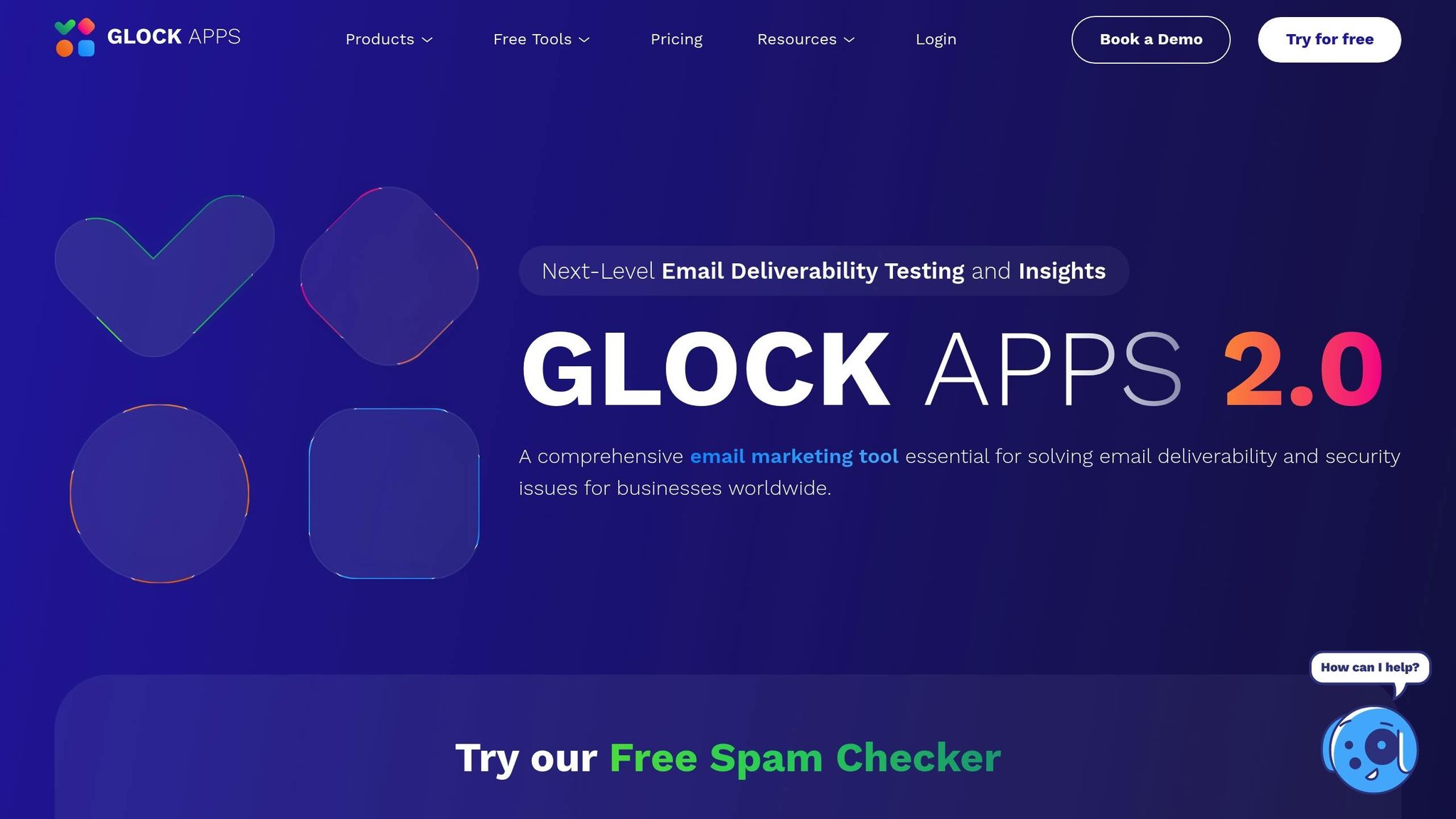
GlockApps is tailored for technical diagnostics, testing emails against spam filters like Barracuda and SpamAssassin. It also tracks sender reputation across 50+ blocklists and provides uptime alerts. What sets GlockApps apart is its actionable recommendations to address specific issues.
Pricing starts at $59/month when billed annually (or $85/month if billed monthly) for the Essential plan, which includes 30 spam tests. The platform has earned a 4.8/5 rating on Capterra.
That said, GlockApps has its limitations. Its seed list includes only about 100 mailboxes, and it doesn’t offer email previews for different clients. Additionally, its integrations are fewer compared to more robust platforms, and tests must be manually created rather than automated. For teams looking for broader coverage, Folderly might be a better alternative.
Folderly
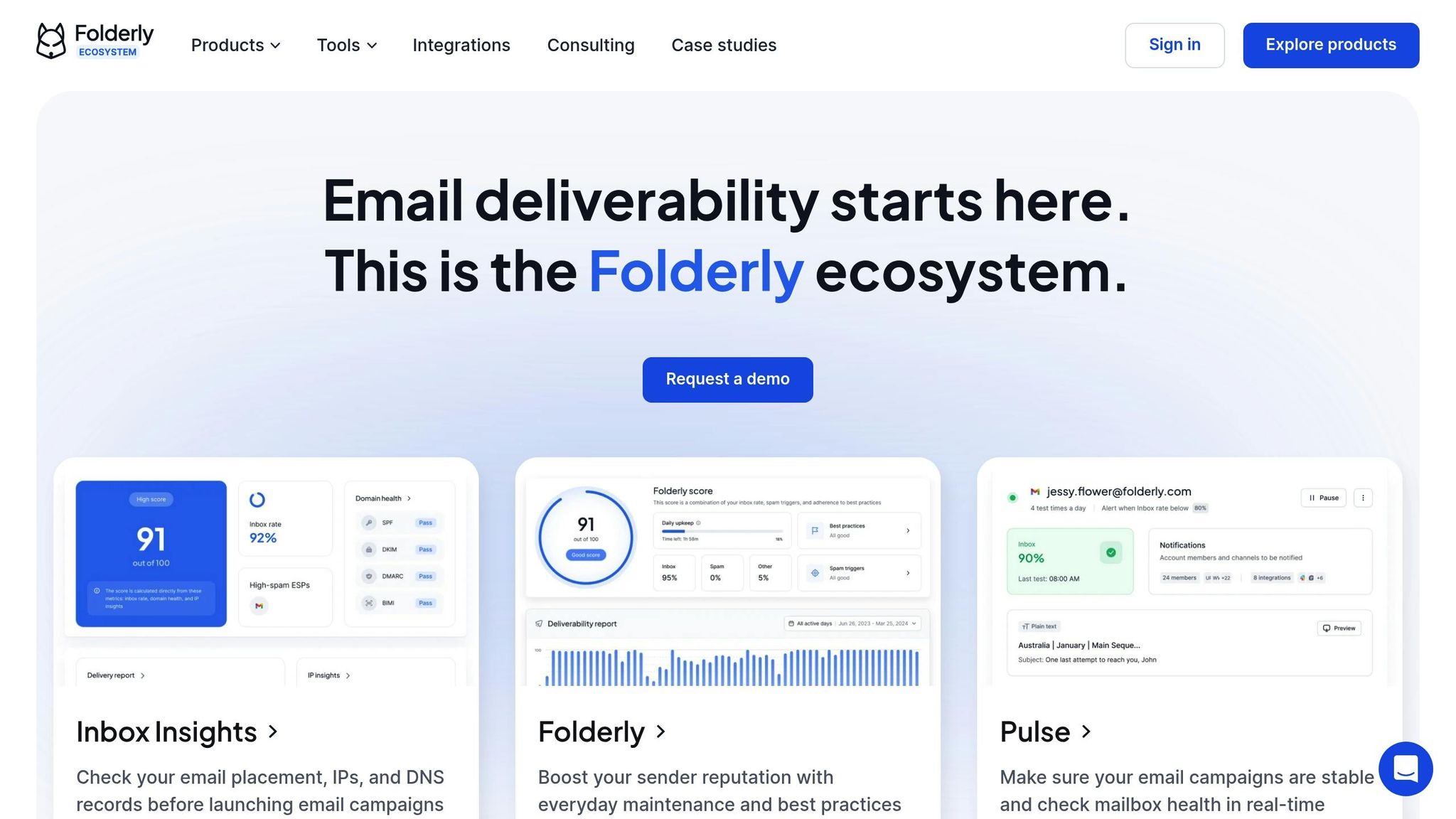
Folderly takes a proactive stance on deliverability by focusing on spam trigger detection and automated mailbox warming. It uses AI-driven tools to assess domain health and flag risky content in email templates.
Folderly’s pricing starts at $120/month per mailbox (or $96/month annually). For cold email campaigns, a specialized tier is available at $200/month per inbox. It has received a 4.8/5 rating on G2, praised for its user-friendly interface and seamless ESP integrations.
However, Folderly primarily caters to major ISPs like Gmail, Yahoo, and Outlook. It doesn’t include an API for custom automation and lacks testing against specific spam filters such as SpamAssassin. Additionally, its higher per-mailbox cost can be a hurdle for scaling operations. For businesses needing enterprise-level analytics, Validity Everest offers an alternative.
Validity Everest
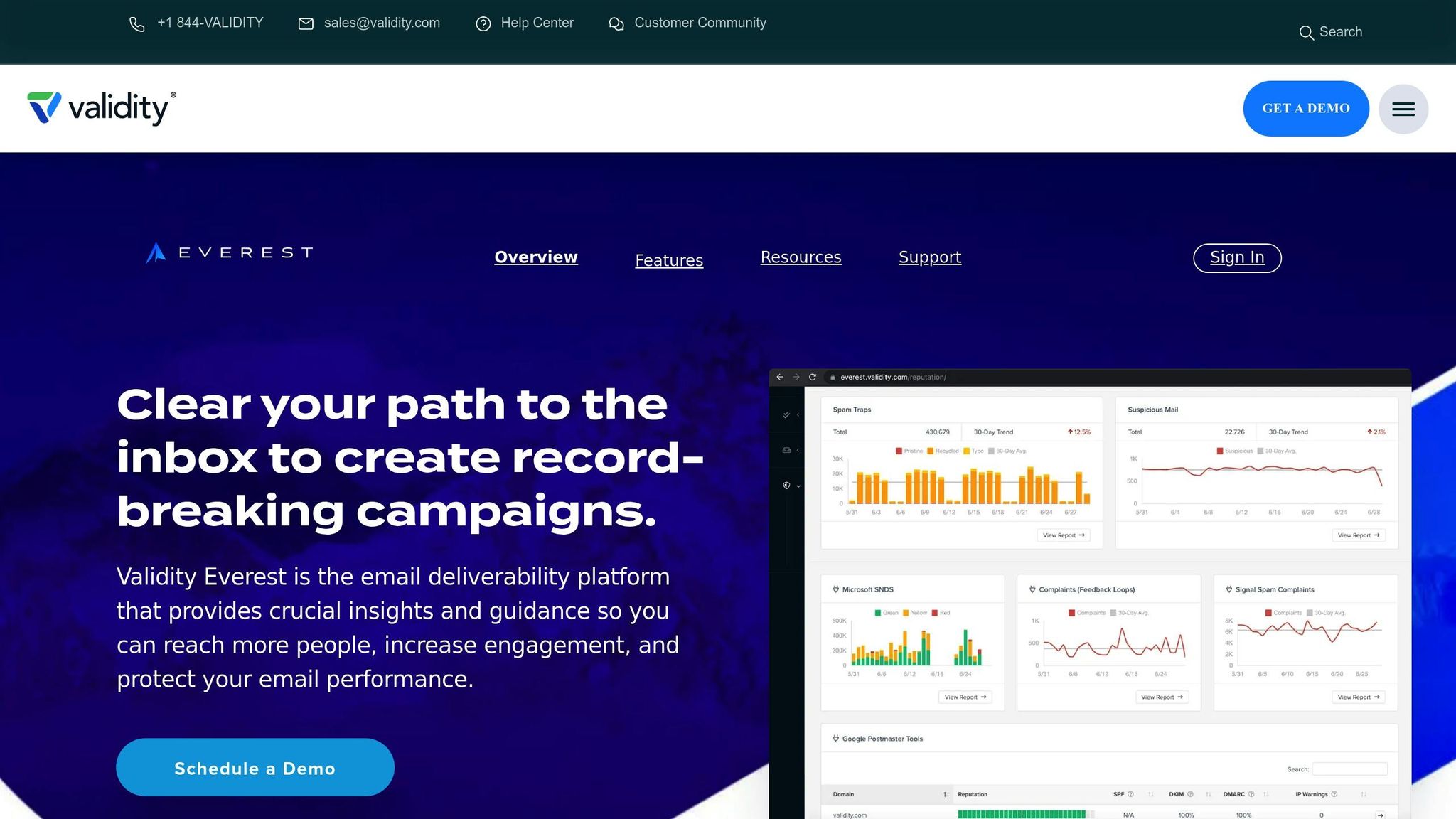
Validity Everest provides enterprise-grade analytics with a global seed list, testing email placement across 140 ISPs. It also offers competitive intelligence, allowing users to benchmark their performance against other senders.
The entry-level "Elements" plan costs $20/month for 5,000 emails. To access more features, users can upgrade to the "Elements Plus" plan at $525/month for 20,000 emails. Enterprise versions can cost up to $15,000 annually.
Despite its strengths, Validity Everest has some notable limitations. It doesn’t offer a free trial, lacks live support, and has slow customer service. The initial setup can also take up to 60 minutes.
Tool Comparison by Key Metrics
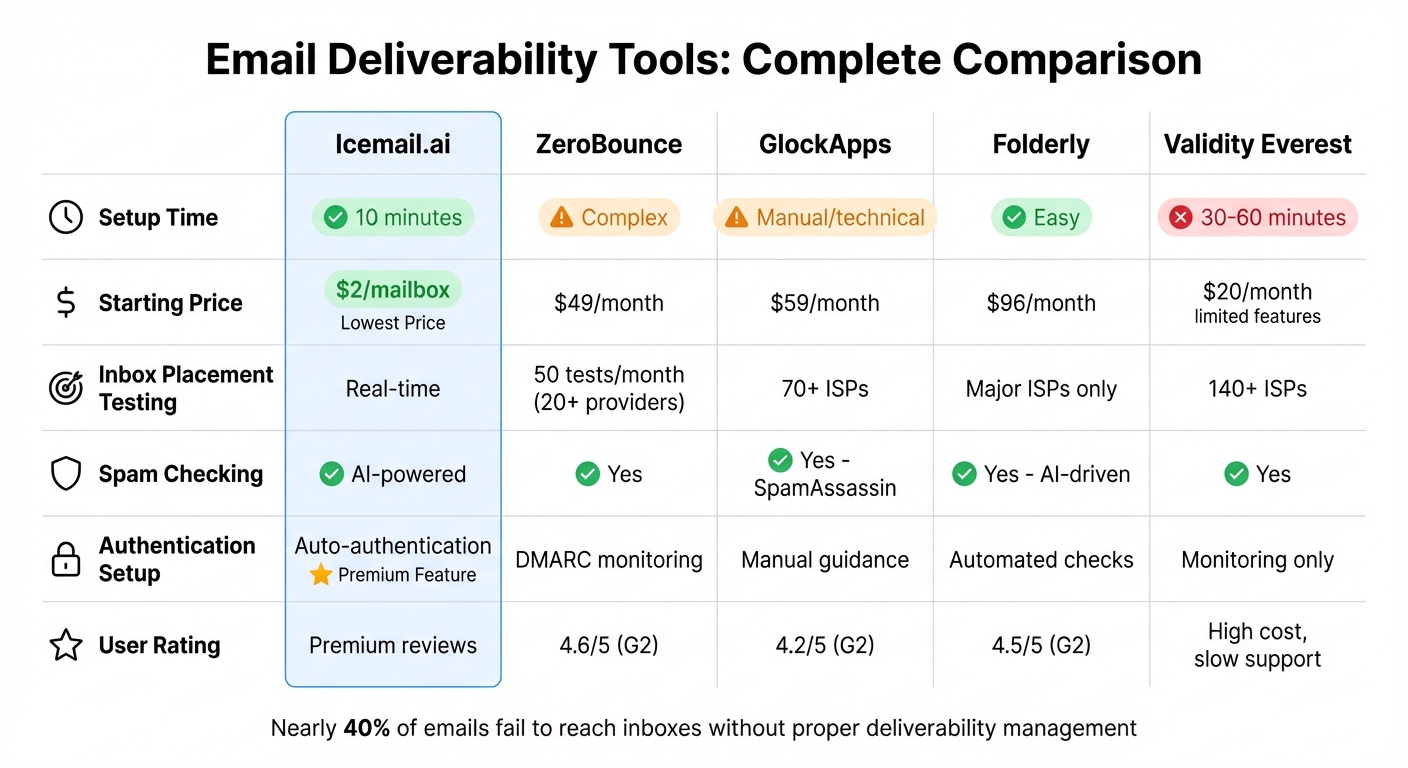
When deciding on a tool, setup speed, cost, and result accuracy are crucial factors to weigh. Comparing platforms side by side reveals where each one excels - and where they fall short.
Icemail.ai stands out with a quick 10-minute onboarding process, thanks to its auto-authentication feature. It eliminates the usual headaches of setting up DKIM, DMARC, and SPF records, meaning no DNS expertise is needed. In contrast, many other platforms require advanced technical skills and more time to get started.
Cost is another area where differences become apparent. For example, Folderly charges $96 per mailbox per month (billed annually), while Validity Everest’s full-featured Elements Plus plan can climb to $525 per month. While Icemail.ai is positioned as a premium solution due to its speed and automation, it remains competitive compared to enterprise-grade alternatives that demand significant financial investment. The table below offers a quick snapshot of how these tools compare.
Comparison Table
| Tool | Setup Time | Starting Price | Inbox Placement Testing | Spam Checking | Authentication Setup | User Rating |
|---|---|---|---|---|---|---|
| Icemail.ai | 10 minutes | Premium | Real-time | AI-powered | Auto-authentication | Premium reviews |
| ZeroBounce | Complex | $49/month | 50 tests per month | Yes | DMARC monitoring | 4.6/5 on G2 |
| GlockApps | Manual/technical | $59/month | Testing across 70+ ISPs | Yes (SpamAssassin) | Manual guidance | 4.2/5 on G2 |
| Folderly | Easy (autopilot) | $96/month | Major ISPs only | Yes (AI-driven) | Automated checks | 4.5/5 on G2 |
| Validity Everest | 30–60 minutes | $20/month | 140+ ISPs | Yes | Monitoring only | High cost, slow support |
Some tools prioritize extensive testing features but sacrifice user-friendliness. For instance, Validity Everest boasts broad coverage across 140+ ISPs but comes with a steep learning curve and a complicated backend, making it less suitable for teams without technical expertise. Similarly, GlockApps offers robust spam filter testing against systems like Barracuda and SpamAssassin but relies on manual test creation rather than automation.
Icemail.ai, on the other hand, bridges these gaps. It combines enterprise-level infrastructure with user-friendly automation, delivering faster setup times and a more seamless experience compared to its competitors. This makes it an appealing option for teams seeking efficiency without compromising on performance.
How to Choose the Right Benchmarking Tool
Choosing the right benchmarking tool boils down to a few key considerations: the size of your campaign, your team's technical know-how, and the scalability you need. If you're running small campaigns, basic tools might suffice. But for large-scale cold email campaigns - especially when juggling multiple domains and mailboxes - you'll need a tool that supports unlimited mailboxes and automates mailbox rotation to safeguard your sender reputation. These features are critical when assessing a tool's integration and automation capabilities.
Integration is a must-have. Your tool should sync seamlessly with your CRM and outreach platforms to simplify workflows. If your team isn't particularly tech-savvy, look for tools offering automated authentication setups. Manual configuration often requires DNS expertise, which can be a hassle for teams lacking technical resources.
Pricing is another factor to weigh. Agencies managing several client domains should prioritize tools with features like white-labeling and centralized account management. On the other hand, solo users or smaller teams might lean toward flexible pricing models that grow with their needs.
Don't overlook warm-up features for new domains. Research shows that nearly 40% of cold emails end up in spam folders without proper deliverability management. A good tool will simulate natural email activity - like replying to messages, marking emails as important, and gradually increasing sending volume over a few weeks. For example, a solid warm-up plan might start with 10–20 emails daily, ramp up to 50–100, and cap daily volumes at under 200 emails per mailbox to avoid triggering spam filters. A tool that integrates with your CRM and automates these warm-up processes not only benchmarks deliverability but actively improves it.
Why Icemail.ai is the Best Choice
Considering these factors, a platform that combines automation with scalability stands out. Icemail.ai is a prime example. With a 10-minute onboarding process and auto-authentication for DKIM, DMARC, and SPF records, it eliminates the manual setup headaches, allowing you to manage dozens of mailboxes across multiple domains with ease.
Icemail.ai is especially suited for agencies and high-volume users. It offers bulk mailbox purchases and instant domain setup, making it perfect for quickly spinning up new sending accounts. Plus, it’s competitively priced - delivering premium service at lower per-mailbox rates than many competitors. Features like 1-click import/export and bulk updates let you manage your entire cold email infrastructure from a single, streamlined dashboard.
Conclusion
Getting email deliverability right is a game-changer for cold outreach. With nearly 17% of emails never making it to inboxes and over half of senders missing the mark, having clear benchmarks isn’t optional - it’s essential. These metrics help you understand whether your emails land in the Primary inbox or get buried in spam. And that can mean the difference between seeing an impressive $36 to $42 return for every $1 spent on email marketing or watching your campaigns flop without knowing why.
Industry experts emphasize this point:
"If your emails aren't getting into your prospects' inboxes, nothing else matters." - Amanda Laine
Benchmarking tools make deliverability measurable, taking the guesswork out of the process. While platforms like ZeroBounce, GlockApps, Folderly, and Validity Everest offer solid options, they often come with hurdles like complicated setups or limited integrations. For SDRs, agencies, and marketers who need speed and simplicity at scale, these challenges can slow progress.
That’s where Icemail.ai steps in. It doesn’t just test deliverability - it simplifies the entire process. With automated authentication and centralized management, it removes the usual friction and supports ROI-focused benchmarking. At just $2.5 per mailbox, it delivers enterprise-grade infrastructure at a fraction of the cost, offering high performance without added complexity. For teams serious about getting their emails into inboxes, it’s a solution that checks all the boxes.
Related reading
- monitoring email infrastructure with top tools
- testing inbox placement for cold emails
- comprehensive email deliverability score checker
- comparing email warm-up tools for SDRs
- tracking deliverability during the warm-up phase
- differences between performance and deliverability metrics
- best email verification tools for 2026
Frequently asked questions
How much does Icemail.ai cost compared to other email deliverability tools?+
Icemail.ai costs just $2 per mailbox, making it significantly more affordable than competitors. For comparison, Folderly charges $96 per mailbox per month, GlockApps starts at $59/month, and Validity Everest's full-featured plan costs $525/month. This makes Icemail.ai nearly 48 times more cost-effective than some alternatives while still delivering premium features.
What is the average email deliverability rate and why does it matter?+
The industry average email deliverability rate is 88.9%, but nearly 40% of emails fail to reach inboxes without proper deliverability management. This matters because emails that don't reach inboxes represent lost revenue and wasted effort. With proper benchmarking and tools, businesses can achieve a $36 to $42 return for every $1 spent on email marketing.
How long does it take to set up email authentication with different tools?+
Setup times vary dramatically across platforms. Icemail.ai offers the fastest setup at just 10 minutes with auto-authentication for DKIM, DMARC, and SPF records. In contrast, Validity Everest takes 30-60 minutes, while tools like GlockApps and ZeroBounce require manual, technical setup that can take much longer and demands DNS expertise.
What features should I prioritize when choosing an email deliverability tool?+
Prioritize automated authentication setup (SPF, DKIM, DMARC), real-time inbox placement testing, spam filter checking, and scalability for multiple mailboxes. For agencies and high-volume users, look for bulk mailbox management, white-labeling capabilities, and seamless CRM integration. Mailbox warm-up features are also essential, as they help new domains gradually build sender reputation.
How does inbox placement testing work across different email providers?+
Inbox placement testing sends test emails to seed lists across various ISPs to determine where your emails land - primary inbox, promotions tab, or spam folder. Different tools offer varying coverage: Validity Everest tests across 140+ ISPs, GlockApps covers 70+ ISPs, while Folderly focuses only on major providers like Gmail, Yahoo, and Outlook. More comprehensive testing provides better insights into deliverability performance.
What is email warm-up and why is it necessary for cold email campaigns?+
Email warm-up simulates natural email activity for new domains by gradually increasing sending volume over several weeks. A proper warm-up starts with 10-20 emails daily, ramps up to 50-100, and caps at under 200 emails per mailbox to avoid spam filters. This process is critical because nearly 40% of cold emails end up in spam folders without proper deliverability management and warm-up protocols.
Can email deliverability tools integrate with existing CRM and outreach platforms?+
Yes, most modern deliverability tools offer integrations with CRMs and outreach platforms to streamline workflows. However, integration capabilities vary significantly. Tools like Icemail.ai provide 1-click import/export and centralized management, while others like GlockApps have fewer integrations. When evaluating tools, verify they support your specific platforms and offer the automation level your team needs.